
01
Start with the right system
Solar generation, household loads, battery capacity and electrical limits shape your energy plan.
Virtual power plants · explained simply
A virtual power plant connects home batteries to help support the grid. Learn how it works, what stays under your control and what to check before joining.How virtual power plants work, and what to check before joining.
Choose one to start. The form takes about 2 minutes.
Meet Ausave
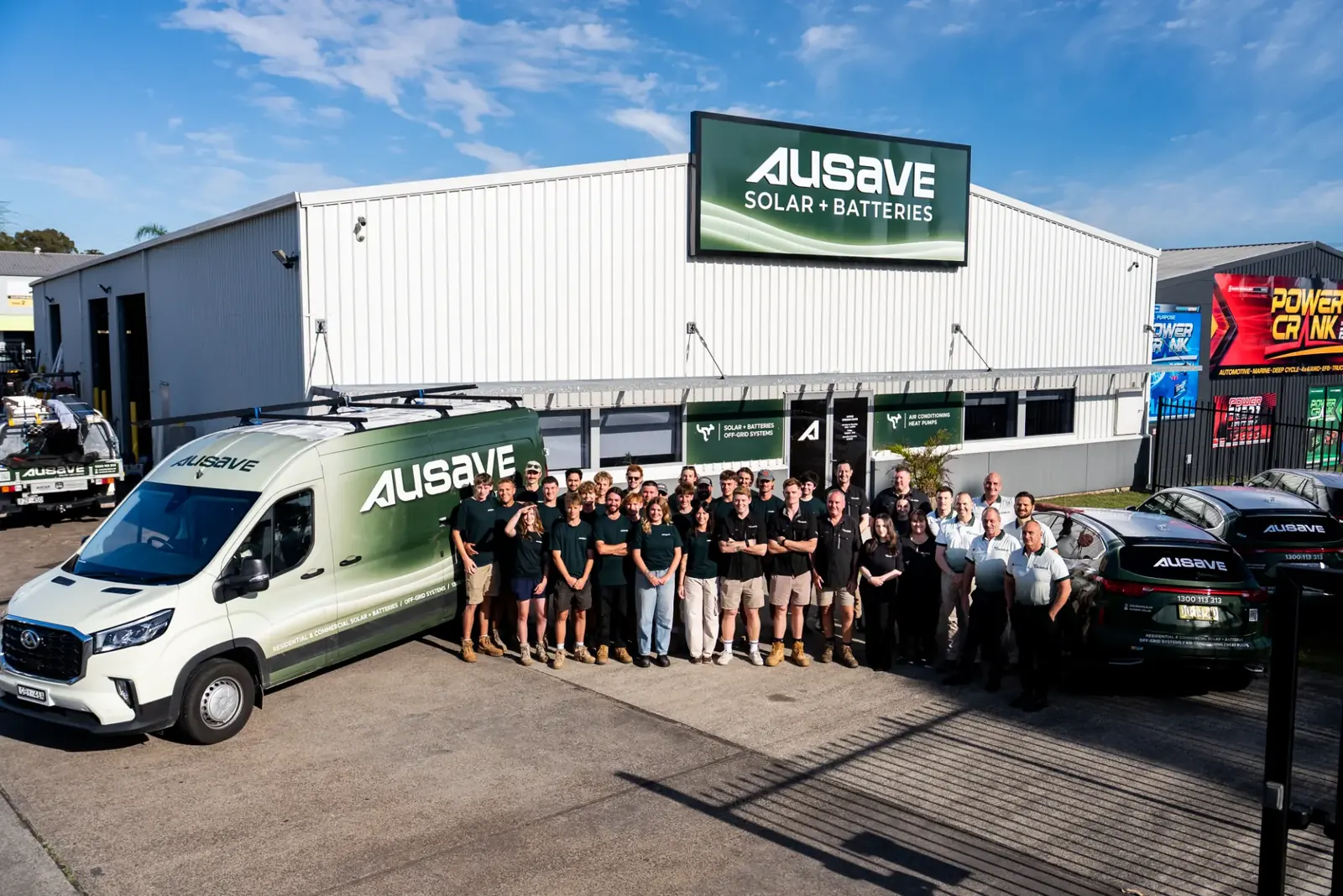
Mark, Mitch and their dad Lloyd explain who we are, where we install and what happens after you ask for a quote.
What happens after you ask for a quote
A virtual power plant is a network of batteries connected through smart software. A VPP operator can coordinate their charging and export to help the electricity grid when it needs support.
Your battery remains at your property. Joining gives the operator access under an agreed contract—it does not turn your home into a public power station.
Choose a destination below—or tap a part of the diagram—to see a simple example of energy moving through a home system.
In this example, surplus solar charges the battery after the home's immediate needs are met. What can be stored depends on generation, household use and available battery capacity.
These buttons change the illustration only. Real energy flows are managed by your equipment and, if enrolled, your VPP operator.
Solar generation, household loads, battery capacity and electrical limits shape your energy plan.
Compare programs, confirm your hardware is supported and read the battery-access and tariff conditions before enrolling.
If enrolled, the operator can request controlled charging or export. Your contract and system settings determine the available capacity.
Monitor your energy use, charges and battery behaviour. Review reserve settings, warranty conditions and how to leave or change programs.
A VPP may offer credits or payments and help make better use of renewable energy. It also means sharing access to your battery. The right fit depends on your household and the complete contract—not a promised saving.
A virtual power plant (VPP) links many small energy systems, such as home batteries, using software. An operator coordinates enrolled batteries to help balance supply and demand on the electricity grid.
No. Being VPP-capable is different from joining a VPP. Participation is optional. You can use a compatible battery for your own household needs without enrolling in a program.
No. Exported electricity joins the shared grid, rather than being delivered to a specific neighbour or business you select. The diagram on this page is a simplified demonstration, not a real battery control.
This depends on the program and your contract. Before joining, ask how much battery capacity the operator can access, whether a minimum reserve is supported, who can change it and how it behaves during an outage. Backup requires compatible equipment and a suitable installation.
No. Each provider has its own supported hardware, software, internet, location and retailer requirements. Ausave can assess your Sigenergy installation and help you identify the compatibility questions to ask; enrolment is a separate agreement with the VPP operator.
No. VPP savings are not guaranteed. Some programs offer credits or export payments, but outcomes depend on charges, rates, battery access, household use and the contract. Compare the whole plan, including exit terms and any warranty implications, rather than an advertised reward alone.
For separate incentive information, see our dedicated rebates guide. Reviewed 9 October 2026.
Ausave installs Sigenergy batteries, inverters and EV chargers exclusively. Our in-house team can assess your home and explain what to check for optional VPP participation. Your VPP contract is with your chosen operator.
What's your quarterly electricity bill?
Slide to your average bill to start a tailored recommendation
No obligation · An Ausave specialist will follow up